Friday, July 6, 2012

Recipe of the Week: Tabbouleh


Bulgur is the perfect way to get in a light grain during the summer heat. It is a whole grain mean it's naturally high in fiber, helping to keep cholesterol low.
 
If you haven't tried Tabbouleh salad before, you're missing out! It's extrememly quick to make while giving you the perfect side to grilled chicken, vegetables, hummus, etc.
 
Try this recipe:
 
2.5 cups boiling water
1.5 cups uncooked bulgur
2 cups chopped parsley
1 cup diced tomato
3/4 cup sliced green onions
1/4 cup chopped mint
6 tbsp. fresh lemon juice
3 tbsp. extra-virgin olive oil
1 tsp. salt
1 tsp. pepper
1/2 tsp. cumin
 
 
Combine boiling water and bulgur in a large bowl; cover and let stand for an hour. Add remaining ingredients; toss well. Cover and chill for 2 hours.
 
If you want an even easier solution, try picking up this box at Central Market & just add water:


Friday, April 20, 2012

Back to the Basics... Carbohydrates


Carbohydrate + Protein + Fat = Balance


Many clients that I interact with want to know the answer to these questions... "How many carbs should I be eating? How much protein do I need? Can't I just cut the carbs to lose weight? If I eliminate fat, then I will burn off my unwanted fat, right?"
 
Hopefully these next few posts will bring some clarity to what each macronutrient does for your body and why you need ALL of them in order for your metabolism to work efficiently whether the goal is weight gain, loss, or maintenance.
 

#1 - Carbohydrates

 
Whether you are an elite athlete or a weekend warrior, carbohydrates are your main fuel source. Maintaining adequate carbohydrate stores for your physical activity is critical for optimal performance. We've all had the days where we didn't fuel as well... compare a day without breakfast to a day with a good breakfast, hydration & snack before a run. Which day turned out better for your performance?
 
While carbohydrates have gained a bad reputation for causing weight gain, the truth is that carbohydrate and protein both contain 4 calories per gram. As long as you are eating carbs in the right portions sizes, they are absorbed correctly as well as helpful for performance. So how did protein become good and carbs become bad?? The trouble comes from eating the wrong types of carbohydrate: chips, candy, processed food, soda, etc. which also leads to overeating.
 

What are the healthy carbohydrate choices?

 
Complex:
Complex carbohydrates come from the starch and fiber in grains, legumes, potatoes and root vegetables. Choose whole grains when possible! Whole grains include brown rice, whole wheat pasta, oatmeal, whole grain cereal (Kashi), & whole grain bread. These choices contain fiber, B vitamins and protein to fuel the body. Beans, sweet potatoes, white potatoes, corn, squash, and peas are starchy vegetables that also provide a good amount of fiber.
 
Simple:
Simple carbs include the simple sugars found in fruits, milk, & honey. Choose low-fat milk, a variety of fruits and honey when needing a natural sugar source. Because these foods are simple carbohydrates, the sugar breaks down faster in the body. It is best to eat these types of food with a protein or healthy fat to keep your blood sugar and energy levels stable since they are lacking in fiber/protein compared to complex carbohydrates.
 
 
Try switching sweet potatoes, whole grain bread, brown rice, fruit and low-fat milk for chips, candy, soda, white pasta & cheez-its... I think you will feel a lot more CLEAN and ENERGIZED! You might also find you can eat more for the same amount of calories when choosing cleaner foods.
 
While the elite athlete will generally need more carbohydrate than the weekend warrior, it is best to contact a registered dietitian if you want a specific meal plan or are training for a specific event.
 
                                             Look for the protein and fat posts coming soon!



Sunday, April 15, 2012

Wild or Farm Raised??

When it comes to fish.... wild or farm-raised?


People are catching on to the fact that fish contain the healthy fat: omega 3. Omega-3 is helpful for reducing inflammation in the body (especially great for athletes who are constantly breaking down their bodies), brain function and vitamin absorption. Many NFL teams have made fish oil pills mandatory in order to help prevent/recover in case of concussion. While research is still going on related to concussions, we know that the brain needs omega-3 because it can concentrate, focus and perform better with higher doses. Omega-3 fatty acids also decrease triglyceride levels, slow growth rate of atherosclerotic plaque, and lower blood pressure (slightly).

The American Heart Association recommends eating fish (particularly fatty fish) at least two times (two servings) a week. Each serving is 3.5 ounce cooked, or about ¾ cup of flaked fish. Fatty fish like salmon, mackerel, herring, lake trout, sardines and albacore tuna are high in omega-3 fatty acids. 

Many people have probably noticed there are two different types of fish, especially salmon, when choosing at the grocery store. Wild caught is the better choice because some fish and farm raised salmon contain toxic substances, aka PCBs.. 

What are PCBs?

Polychlorinated biphenyls PCBs are mixtures of up to 209 individual chlorinated compounds (known as congeners). There are no known natural sources of PCBs. PCBs are either oily liquids or solids that are colorless to light yellow. PCBs have been used as coolants and lubricants in transformers, capacitors, and other electrical equipment because they don't burn easily and are good insulators. The manufacture of PCBs was stopped in the U.S. in 1977 because of evidence they build up in the environment and can cause harmful health effects. However, PCBs persist in the environment. Fish absorb PCBs from contaminated sediments and from their food.

A couple of studies show how this can affect us:

  • EWG Report: In July 2003, the Environmental Working Group EWG released a report stating that farm raised salmon purchased in the United States contain the highest level of PCBs in the food supply system. In the report, EWG reported that farm raised salmon have 16 times PCBs found in wild salmon, 4 times the levels in beef, and 3.4 times the levels in other seafood. EWG recommends that consumers choose wild salmon instead of farm raised salmon, and they should eat an 8 oz serving of farm raised salmon no more than once a month.
  • Science Journal: In January 2004, the journal Science warned that farm raised salmon contain 10 times more toxins (PCBs, dioxin, etc.) than wild salmon. The study recommends that farm raised salmon should be eaten once a month, perhaps every two months as they pose cancer risks to the human beings.

While shopping at Central Market this weekend, I had to make the choice! See the photos below. Without editing either, there is better color in the "Wild" fish, and yes, it is a little more expensive. Choosing the "Wild" may be worth the higher quality as well as toxin & PCB-free!

FARM
WILD


Just like when considering meals and snacks, always choose foods that are more simple and can nourish your body in the best way.

Sunday, April 1, 2012

Recipe of the Week: Crockpot Lasagna

About a month ago, I was introduced to a new way to cook lasagna: the crockpot! My older sister made a verrrry yummy dinner thanks to this recipe. By making a few adjustments, it could be a meal high in fiber, protein and whole grains. 
Ingredients
  • 3 cans (14.4 ounces) crushed tomatoes
  • 3 cloves garlic , finely chopped
  • 2 Tbsp. dried oregano
  • 1/2 tsp. kosher salt
  • 1/4 tsp. red pepper flakes
  • 1/4 tsp. freshly ground black pepper
  • 2 containers (15 ounces each) fresh ricotta (Choose part-skim)
  • 2 cups (8 ounces) grated mozzarella (Choose 2% or part-skim)
  • 1/4 cup grated Parmesan (Choose 2% or part-skim)
  • 12 lasagna noodles (Choose whole wheat noodles for more fiber)
  • 5 ounces (about 6 cups) baby spinach
Directions
In a medium bowl, combine the tomatoes, garlic, oregano, salt, red pepper and black pepper. In a separate bowl, mix the ricotta, 1 cup of the mozzarella and Parmesan.

In the bottom of a 5- to 6-quart slow cooker, spread a thin layer of the sauce. Top with 3 of the noodles (breaking to fit as necessary). Spread about 1 cup of the sauce over the noodles and layer with 2 cups of the spinach and 1 1/2 cups of the cheese mixture. Repeat twice more with the noodles, sauce, spinach and cheese mixture. Top with the remaining 3 noodles, sauce and 1 cup mozzarella.

Cook on low, covered, until the noodles are tender—especially in the center of the lasagna—about 3 to 3 1/2 hours. Servings: Serves 6


This is a great idea for a pre-race or pre-game dinner since it combines whole grain carbohydrates and quality protein!

Tuesday, March 20, 2012

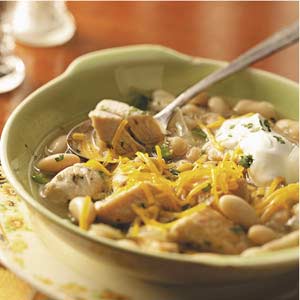
Recipe of the Week: Chicken Chili

We didn't get much of a chance to make chili this "winter" in Texas, so my roommates and I decided it was time to make one of our favorite cold weather dishes.
 
Ingredients:
2 (15-ounce) cans navy beans, drained and rinsed
2 (15-ounce) cans garbanzo beans, drained and rinsed
1 large onion, chopped
4 teaspoons canola oil, divided
1 tablespoons unsalted butter
1/4 cup all-purpose flour
1 cup low sodium, fat free chicken broth
2 cans fat free evaporated skim milk
2 teaspoon Tabasco, more or less to taste
2 teaspoons chili powder
1 1/2 teaspoons ground cumin
1 jalapeno pepper, seeded and chopped
2 teaspoons dried oregano
1/2 teaspoon salt, or to taste
1/2 teaspoon white pepper, or to taste (black pepper may be used)
2 (4-ounce) cans chopped green chilies, drained
2 cups shredded boneless skinless chicken
The juice of 2 limes
1/2 cup fat free sour cream
4 ounces 2% Monterey Jack cheese, shredded


In a 6- to 8-quart heavy pot or dutch oven, cook onion in 2 teaspoons canola oil over moderate heat until golden and softened. Create roux by melting 1 tablespoon butter and 2 teaspoons canola oil over moderately low heat and whisk in flour. Cook into roux, whisking constantly, 3 minutes. Add into pot or dutch oven while gradually stirring in broth and evaporated skim milk, whisking constantly. Bring mixture to a boil and simmer, stirring occasionally, 5 minutes, or until thickened. Stir in Tabasco, chili powder, cumin, jalapeno pepper, oregano, salt, and white pepper. Add beans, chilies, chicken, and lime juice, cook mixture over moderately low heat, stirring, 20 minutes. Stir sour cream into chili. Garnish chili with cilantro and 2% Monterey Jack cheese. Serve with salsa and additional sour cream if desired.


 For an apartment of 3, I usually double it and add one extra can of navy or garbanzo beans, then serve with cornbread or warmed corn tortillas. The jalapeno adds just enough heat to notice but you can always make it without.
 
1 cup: 334 calories, 8g Fat, 25g Carbohydrate, 6g Fiber, 30g Protein


Thursday, March 8, 2012

Snack Smarter

Somehow the weight loss trend has become all about bars, meal replacement shakes, frozen meals, and special pills. If you take this pill AND drink 10-12 glasses of water each day, with 2 glasses before each meal, you will lose weight. Really? Wouldn't this work for anyone?

So how can someone lose body fat while retaining their lean muscle mass to get a healthy weight loss?

Eat clean & often!

The easiest way to eat "clean" is by choosing single foods to create meals and/or snacks. Single foods include foods that have one ingredient: apple, orange, broccoli, carrots, chicken breast, lean beef, low-fat milk, nuts, etc. 

By eating single foods, you will consume less processed meals and snacks throughout the day. This will automatically increase the amount of vitamins and minerals that you take in as well as decrease the "bad" fat that is often used to preserve foods.
 
When grabbing a snack, you know it's  good choice when at least 2 food groups are combined. The food groups are: Grains, Protein, Dairy, Fruit, Vegetables, and Healthy Fat.

Compare these snacks:

Whole grain triscuits (Grains)
2% String cheese (Dairy)
15 Grapes (Fruit)
Nutrition Info: 230 Calories, 34g Carb, 4g Fiber, 12g Protein


1/2 cup Pistachios (Protein/Fat)
1/2 Turkey sandwich (Protein)
on 1 slice Whole grain bread (Grains)
Nutrition Info: 300 Calories, 26g Carb, 8g Fiber, 18g Protein


Apple/banana (Fruit)
Almond/Peanut butter (Protein/Fat)
Nutrition Info: 250 Calories, 24g Carb, 5g Fiber, 7g Protein
 
 
Hummus (Fat)
Carrots/Celery/Whole grain crackers (Vegetable/Grains)
Nutrition Info: 230 Calories, 29g Carb, 3g Fiber, 5g Protein
 
 
1% Chocolate Milk - 1 cup (Protein, Dairy)
Nutrition Info: 170 Calories, 29g Carb, 9g Protein
 
 
...to these:
 

Cheez-its (Grains)
Nutrition Info: 300 Calories, 40g Carb, 0g Fiber, 6g Protein
 
 
Granola bar - Nutrigrain (Grain)
Nutrition Info: 140 Calories, 26g Carb, 1g Fiber, 1g Protein
 
 
Fruit Snacks (Processed carbohydrate)
Nutrition Info: 80 Calories, 20g Carb, 0g Fiber, 1g Protein
 
 
Chips - SunChips (Grain/Processed carbohydrate)
Nutrition Info: 140 Calories, 18g Carb, 2g Fiber, 2g Protein

Notice the snacks in the first group came from pairing 2 or more food groups together to make the carbohydrate and protein content more balanced. This is the key to keeping blood sugar stable leading to better energy levels and concentration. Most of the ready-to-go, easy snacks (Chips, pretzels, bars, even fruit) are mainly carbohydrate. Always pair a carbohydrate type food with protein!
 
Eating a food in it's original form ends up creating snacks with more quality nutrients. It's easy to think that something is "healthy" like SunChips (they're made with whole grains) or granola bars (aren't they good for you?) or even fruit snacks (they're made from real fruit, right?) However, nothing can replace eating a food in it's original form. By eating a cleaner diet, a person will reap the benefits of fiber, vitamins, minerals, protein and FEEL better overall.


Tuesday, February 28, 2012

Recipe of the Week: Dairy-Free Ice Cream

A Guest Post Recipe from Alex Strudwick, student at The Culinary Institute of America in New York... and my little sister :) Check out her blog here!

Ingredients:

o   1 ripe Banana, sliced and frozen
o   1-2 Tbsp of Unsweetened Cocoa Powder, good quality
o   1 tsp of Agave Nectar or Honey
o   *Optional - 1 Tbsp Peanut Butter


1.      Slice the banana and place it in a Ziploc bag in the freezer until frozen (several hours or overnight). Once it is frozen, place it in a food processor and blend until smooth.
2.    Next, add 1 to 2 Tbsp of cocoa powder, depending on how chocolaty you want your ice cream to taste. Blend.


3.    To sweeten the mixture, add either honey or agave nectar. If you choose to flavor your ice cream with peanut butter as well, it can be added at this point. Now, blend it all together.


4.    If you like soft-serve ice cream then the mixture is ready to serve, however, you can place it back in the freezer for several hours to harden up.


Enjoy!


Site Design By Designer Blogs